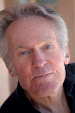
Continuing the portrait series here's a ten year old shot of an unnamed
model during a photo session at the state prison on the
Turquoise Trail south of Santa Fe. It was taken under a wooden guard tower if memory serves. So, it
was in open shade and with a single white reflector to provide fill. The
young woman was wearing a monster hang over and was as interested as her face suggests. It comes across melancholy but was outright boredom.
Sunday, March 04, 2018
Sunday, February 25, 2018
Taos Is Art
I’m pleased to be among the 66 artists whose artwork was
juried into “Taos Is Art” joining 18 invited masters for a total of 84 banners
throughout historic downtown Taos from April through October. The program will
include 59 large banners flown on the Plaza and on our main street, Paseo del
Pueblo, along with 25 on streets surrounding famed Taos Plaza. My photograph
“Moon Over Ranchos” will be among the 25 15”x30” banners. I join photographers Zoe Zimmerman, Sasha Vam Dorp, Nina Anthony, Meredith Garcia,
Debbie Lujan and Steve Bundy. Congratulations to all.
Taos has been a mythic art colony for 120 years and continues to be a singular place revered for creating art. No place I know compares to Taos in embracing art as a way of life. And that's not just the visual arts. There's a vibrant writing community and a music scene that compares with cities twenty times its 5,500 population. The night before last I saw British bluesman William Topley at the Solar Center north of town. It was the first stop on his North American tour before starting a residency in Austin. It's telling that an internationally known musician even knows there is a Taos.
Taos is art.
Taos is art.
I’ll get back to the weekly portraits next time.
Sunday, February 18, 2018
A face at the time
![]() |
| Climbing guide, Alain Comeau, 2002 |
I'm launching a weekly series of portraits. Some are damn old. There are at least two reasons that I'm digging so deep. One, some like this one, were shot with my first big boy digital camera and, two, I wanted a subject that needs only one image. I'm entering my film making period and need as much time as possible to learn that complex and foreign language. Third, as if I need it, is that I'm not photographing much and need to fill blog space the lazy man's way. Resort to the old stuff.
My first filmic endeavor will be a short video that shines a light on the fraught issue of meeting women in the metoo moment. I threw the idea out there and my fellow students chose the darn thing. It's supposed to be sketch in the vein of Saturday Night Live, one that threads the needle of laughs with appreciation for the gravity of the conversation.
So a man goes into a bar......
Sunday, February 11, 2018
Good Bones
Pueblo has suffered a series of setbacks since its apex at
the turn of the 20th century. The great flood of 1921 nearly destroyed
downtown Pueblo and 1,500 people lost their lives. And when the city’s steel mill closed in 1982 the knockout blow was delivered. As Pueblo’s biggest employer
the closure left “Steel City” without its economic engine and with its future uncertain.
In its heyday the city boasted a vibrant downtown and seemed
destined to become the capitol of Colorado. The bones of the once thriving city
center remain but its stores and businesses are largely shuttered. The River Walk neighborhood
along the banks of the Arkansas River is Pueblo’s attempt to create an arts and
entertainment district, one that has potential to attract tourists and new residents
to the city. That hasn't materialized but there's tremendous potential for it. We even mused about building a vital art community where low rents and empty space abound. But the leap of faith would be huge. Right now Pueblo is a languishing mill town where Olive Garden and Texas Roadhouse are considered upscale dining. I am such a snob.
Drawn as I am to urban downtowns, I've noticed Pueblo’s skyline each time I've driven I-25 to and from Denver. The Sangre de
Cristo Arts Center in downtown Pueblo lured me off the freeway a couple of years when I stopped to see a stellar Ansel Adams exhibit and again two weeks ago for an opening. Combine a visit to the arts center with lunch at the redoubtable Shamrock Brewing Company for house made beers and hearty pub fare. Those are the makings of worthwhile afternoon.
And while you're at it, take a stroll through the trove of late 19th century structures that fill the city. I love them and the signs that speak to halcyon days.
Sunday, February 04, 2018
Good Morning at the Goodnight Barn
The Goodnight Barn was built in 1870 and is the only
standing edifice from the Charles Goodnight’s sprawling Rock Canyon Ranch west of Pueblo, Colorado. The stone
barn is considered architecturally significant and is the subject of a fundraising effort intended to restore it to its historic glory. Part of that effort is an art show that opened Friday night at the splendid Sangre de Cristo Arts Center in Pueblo's downtown.
Over the years
the barn fell into disrepair, sheltered transients and earned the
moniker “the party house” for reasons that are self-explanatory. Today it's propped up by beams, details of which are abstracted below.
While the barn is historically important, its provenance
gained luster when I learned that Charles Goodnight and Oliver Loving, his
cattle driving partner back in Texas, were the real-life models for the characters
Woodrow Call and Gus McCrae in Larry McMurtry’s epic “Lonesome Dove.”
And now you know the rest of the story.
Sunday, January 28, 2018
First Steps
A few days ago, my friend, the photographer and painter John
Farnsworth, did an Instagram post about the beginnings of the digital
photography age. He harkens back to a whopping one-megapixel unit that could
store all of 70 images. My own baby steps came with a Nikon Coolpix 5000, so
named because of its stellar 5 megapixels of resolution. I did a search yesterday
that told me my sweet little point and shoot weighed in at a hefty $1, 095.
Holy crap, batman. Today we can pick up a mirrorless unit with a one-inch
sensor and 20 megapixels for, oh, $450.
The cool Coolpix entered the market in November of 2001 and I,
trailblazer that I am, owned one shortly thereafter. It was this darling unit that gave me my
first inkling of digital’s promise. Shown above is a shot of an agave plant at
famed Huntington Gardens in Pasadena, California. I was impressed from the
get go. My fate was sealed.
In late March 2002 I had a ski trip to France planned and, as misfortune would have it, Canon announced the first truly high resolution DSLR, the
1Ds with 10.1 megapixels in a body the weight and size of a mainframe computer.
And they had the audacity to charge $7,995 for the monster. Naturally, I needed
one for my trip and embarked to Zurich, Geneva and Chamonix $7,700 lighter. The
image above is from that legendary machine. My skiing was much improved as you can imagine.
To those who have slept through this movie before. Deal with it.
Sunday, January 21, 2018
Trio of trucks in the snow
This truck and its two companions are arguably the most
photographed in all of Taos County. And Taos county is the national capital of
abandoned vehicles. Cloaked in a snowy blanket the truck in the foreground makes a wintery
statement, one that Taos and famed Taos Ski Valley would like to be making
right about now. Up at TSV the snow pack, like that of California’s Sierra, is
4% of normal. The paltry number bodes ill for our rivers, streams and acequias.
Sunday, January 14, 2018
And the winner is
![]() |
| Presbyterian Church, Taiban, NM 48 points |
My highly sophisticated research project designed to reveal the most liked blog images from 2017 has informed us thusly. Two photographs Millwork, Taiban, NM and Abandonado scored zero, zilch, nada. And one that I loved, Porcelain Doll, got on the scorecard with a resounding four points thanks to a last minute reprieve.
Thanks for your feedback.
![]() |
| Pickets, Point Reyes, CA 37 points |
![]() |
| Bent to the Task, Antigua, Guatemala 28 points |
![]() |
| Afternoon Delight, Winslow, AZ 27 points |
![]() |
| Hard Charging, Mortenson Ranch, NM 27 points |
1
5
Sunday, January 07, 2018
Year of Years: 2017. Click here to see full screen.
![]() |
| Vendadora, Antigua, Guatemala |
Here's a look back at the images that bring the past year
into focus for me. These selections are about the photographs themselves; some may be well crafted and others may tell a compelling story. Maybe some do both.
Would you be so kind as to choose your favorite three? You can comment below or email your choices. Thanks very much.
![]() |
| Maria, Antigua, Guatemala |
![]() |
| Presbyterian Church, Taiban, NM |
![]() |
| Millwork, Taiban, NM |
![]() |
| Lap Chicken, Rayado, NM |
![]() |
| The Citadel, Ghost Ranch, NM |
![]() |
| Sanctuary, Coyote, NM |
![]() |
| Silky Tresses, Taos, NM |
![]() |
| All Things Wool, Taos, NM |
![]() |
| Pickets, Point Reyes, CA |
![]() |
| Abandonado, Des Moines, NM |
![]() |
| Bent to the Task, Antigua. Guatemala |
![]() |
| Mesa sin Sillas, Antigua, Guatemala |
![]() |
| Afternoon Delight, Winslow, AZ |
![]() |
| Homage to Lenny, Taos, NM |
![]() |
| Winding Eastward, Tucumcari, NM |
![]() |
| Cliff Rose, Grand Canyon, AZ |
![]() |
| Hard Charging, Taos, NM |
![]() |
| Buckaroo, Taos, NM |
![]() |
| The Blessing, Antigua, Guatemala |
![]() |
| Porcelain Doll, Taos, NM |
Gracias y Feliz Nuevo Año.
Sunday, December 31, 2017
Parting Shots
![]() |
| School kids in Albuquerque's Old Town |
There are so many directions to go in photography. And going off on tangents can be its own reward for the ADHD among us. Seems that my
photographic impulses are just that, impulses. I’ve got a high key thing in its
infancy on Instagram, for example. The first, an intentionally blown out tree
on the Vista Verde Trail above the Rio Grande got my juices flowing in the
bleached midday sun sort of way. We’ll see where that goes.
Today, however, are a smattering of street shots. Street photography being another continuing passion. I’m more drawn to urban downtowns than villages, to be honest, but you gotta go with what you’ve got.
![]() |
| Sisters I'm guessing on the bandstand of Kit Carson Park in Taos. |
![]() |
| I met this angular dude at Troy Brown's wake last summer. He's Kevin Somethingorother from Jamaica, Queens, NY. Supposed to play a mean jazz piano. |
And a friendly reminder that I usually post more than one image. The way to see the whole shebang is to click on the title of the post that appears at the top of the email you received ("Parting Shots" in this case. That'll take you to the actual blog where you can view screen size images by clicking on one of them.
Next week will be 2017 in review; kind of a highlight reel of captured moments throughout the year. Seeing those gems, I hope you agree, will be worth the extra step.
Have healthy and joyous New Year.
Next week will be 2017 in review; kind of a highlight reel of captured moments throughout the year. Seeing those gems, I hope you agree, will be worth the extra step.
Have healthy and joyous New Year.
Sunday, December 24, 2017
The Russians are coming. The Russians are Coming.
![]() |
| Inside the stockade where the Russian born leaders of the expedition worked and lived. |
The Czarist explorers from Alaska recognized prime oceanfront property when they saw it. The year was 1812. Their contingent arrived on the northern Sonoma Coast where green pastures slope to the Pacific and towering
Redwoods climb the hillside toward Cazadero and down the other side to
what is now Guerneville and the aptly named Russian River Valley. They named their
settlement, Fort Ross. The original manifest lists 25 Russian craftsmen and 80 native (mostly) Aleut sea
hunters; natives of the Aleutian Islands that are strewn for 1,100 miles along
the Bering Strait between Alaska and Siberia.
![]() |
| A window to the Pacific. |
At Fort Ross the settlers were greeted by another first
nations community, the Kashaya Pomo. The
Kashaya called the Aleut hunters “Underwater People” because their boats sat so
low in the water. The Alaskan sea mammal hunters traveled great distances across rough
open water in their tiny boats to hunt for sea otters and fur seals.
As in Alaska, many colonists were mixed race or “creole.” Mixed Russian/Alaska Native or Russian/Californian boys were apprenticed in trades or sent to Russian for their education. In return the boys pledged 10 years of work with Russian American Company at Fort Ross and elsewhere.
![]() |
| On a bluff between the fort and the ocean a fence bends toward the surf 100 feet below. |
In 1820, 53 percent
of the adult population of 260 were Alaskan natives. Alaskan Native workers
were initially marine mammal hunters but later became coopers, tanners,
carpenters and sawyers. But at their core the Alaskan Natives were skilled
hunters and it was those very talents that caused the eventual disruption of
their native cultures. Unable to master these remarkable hunting skills themselves, the
Russians captured, coerced and enslaved much of the native population for the
procurement of seal skins and the highly prized pelt of the sea otter.
By 1839 the Russians
had tired of their southern adventure. In 1841, Swiss pioneer, John Sutter, who had
built Sutter’s Fort in Sacramento, bought the Russian enclave with a promissory
note he never paid.
My first visit to Fort Ross came nearly 70 years ago when I was a camper at Camp Cazadero nestled in the redwoods some 13 miles to the east. At that time I would have lived in Oakland or San Leandro. More precision escapes me.
Sunday, December 17, 2017
Afternoon Delight
I was standing on a corner in Winslow, Arizona next to a flatbed Ford when I glanced up to see a liaison, or facsimile thereof, in the window above me. Was the subject girl, my lord, the owner of said vehicle? Was that real hanky panky on the second floor or a vestige of my aging but vivid imagination? It makes me remember being picked by a dish in a pick-up in Florence, Arizona when I was twenty. That led to absolutely nothing. Thank you very much.
I was heading to El Paso for a gig at folk club there and to visit a lady friend, not necessarily in that order, I caught a lift in Tucson, dozed off shortly thereafter and woke up in the hospital in Lordsburg, New Mexico with 60 stitches being sewn into by scalp. Even today you'll see aftermath of the butchery on my forehead just above my right eye
My alleged doctor told me that my benefactor had rear ended a flatbed truck a few miles east of Tucson.
Yes folks, there is one too many flatbed trucks in this tale.
Sunday, December 10, 2017
Blue Blue Mood
Some years ago, the artist Ulrich Gleiter, of Saint Petersburg by way of Strasbourg and Munich asked me to take his passport photo. He was emphatic that he could not smile as the impudent act would
render his pic unacceptable by his Russian watchers, I mean hosts. “Der vill
be no smilink” or words to that effect.
I think “Uli”, a diminutive he no
longer welcomes since he's forty, looks a gulag bound deer in the headlights.
Gleiter was born in Germany in 1977. He studied at the Dresden Academy of Fine Arts, the Suricov Art Academy in Moscow and the Repin Academy in Saint Petersburg from 2004-2010. The man speaks four languages fluently which means that, according to sworn testimony, he doesn't have to translate as he moves seamlessly between German, Russian, French and English. Oh, his physicist father helped discover the nanoparticle. There's some kind of gene pool thing going on.
This outtake was made with two Profoto flashes and matching 48 inch Chimera softboxes. The shutter sync lagged a tad which accounts for the pesky black stripe at the bottom.
Sunday, December 03, 2017
Alta Vista
![]() |
| A stream wanders to the east between Tucumcari and Concha Lake |
It’s not just the arrow straight roadway from Corazon Hill
to Las Vegas that makes NM Highway 104 so magnetic. It’s how high desert becomes prairie at the height of land and tiny villages punctuate the landscape every dozen miles or so. Settlements with lyrical names like Trujillo, Trementina and Alta Vista appear ahead then disappear in the folds of memory.
Be aware, the only gas between Tucumcari and Las Vegas is at Concha Lake 35 miles northwest of Tucumcari. That leaves 75 miles of empty between you and the known world.
![]() |
| A bare tree on the prairie near Trujillo |
Sunday, November 26, 2017
Vanishing Points and Big Skies
New Mexico Highway 104, a regular on these pages, slices a diagonal course from Tucumcari to Las Vegas or the reverse if you must know. It's a mighty scenic, mostly empty and a favorite in the Immel household. In April we traversed the road in both directions since it's the most direct path to and from I-40 and the mind-numbing boredom of freeway driving across the flats of eastern NM and Texas. While the tarmac twists and turns as you ascend from the nothingness of Tucumcari it runs arrow straight when you reach the height of land past Concha Lake, like a horizontal plumbline into slowly gentrifying Las Vegas.
I have a thing about vanishing points and big skies don't hurt my feelings in the least.
Sunday, November 19, 2017
Precious moments
The lissome lass has leapt from Vermeer's easel it seems to me. The alabaster child and her loving papa pose serenely beneath a gnarly oak at the Taos Wool Festival and are the beneficiaries of the much ballyhooed open shade referenced in last week's post.
Subscribe to:
Posts (Atom)