Sunday, November 29, 2020

Men in Hats, Part Three


Most of the images in the series, Men in Hats, are candids of friends, acquaintances, and passersby on the winding road of life. You may have noticed that most are of old people for obvious reasons. That’s my social set. But I have also done the occasional formal portrait session either on location or in the studio. Yes, I do have a professional set-up in Peggy’s studio, but it needs to be dusted off, re-assembled and relearned for the rare formal occasion. Come to think of it, my Profoto lights, soft boxes, Pocket Wizard transceivers and the rest of the gear were all acquired after taking a portrait lighting class with Alan Thornton at the Santa Fe Workshops a decade ago. I am an unapologetic gear slut. Thankfully, I bought the pricey Profoto strobes on Ebay so my cost per use is down to $500. There's an interesting sidebar about Thornton. After stints as a commercial photographer in Boston and Portland, OR he became a wilderness firefighter and shoots from the field for Getty Images. The man craves action. 

In Alan’s class, Lighting on Location, we used reflectors and Profoto units with an array of modifiers, most notably 4-foot soft boxes of which I have two. While we also dabbled with beauty dishes and grids in various combinations, I gravitate to the diffuse and forgiving softbox. I even use a small LumiQuest for my Speedlight. It's an easy to use, portable tool when I can't find open shade.

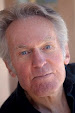
Beyond the bounty of gear afforded by the Santa Fe Workshops were a bevy of professional models. Donald Blake shown here is the most exemplary of them. Famed location photographer Joe Nally calls Donald his favorite model ever and he's photographed hundreds maybe thousands.


Upon Donald’s death a couple of years back Reid Callanan, the founder and owner of the Santa Fe Workshops, wrote that Blake had modeled for his organization for twenty years and that the school published a retrospective to commemorate his passing. In his commentary Callanan extoled Donald’s amazing grasp of the portrait-making craft and not just from the model’s perspective. Callanan suggested that Donald. “offered more insights and advice than many of our instructors.” I can attest to this. While I was making his portrait, he told me where to place the lights, what angle would work best, even the f-stop. He was unfailingly right.

Donald was recovering from a life-threatening illness at the time. He appeared frail but was 100% engaged. Since we were shooting in a recently abandoned hospital, we had ghoulish props aplenty. In fact, was sitting in a wheelchair between green walls when these were taken.

It's fitting that the first two photographs in the book, Donald, are by Joe McNally. It’s available from blurb.com.

This post was going to feature two professional models but I've changed my mind. Donald Blake must have his own post. JT, the self-proclaimed former street tough from Chicago can wait his turn. Whippersnapper.

Sunday, November 22, 2020

Men in Hats - Part Two

Joe Graves joins Juma Archuletta in this week’s edition of Men in Hats. Each of these special men left a gaping void in our little burg. By burg I mean Taos, NM.


Joe was a real mountain man, a self-reliant man of the earth. He was born in Carson, NM on what we Taoseños call the West Rim. It’s said that his father was born in Abiquiu, Georgia Keefe’s New Mexico home. There’s damn near nothing in Carson; a post office, an on again off again convenience store and the stone one room schoolhouse where Joe must have gone to grammar school. He was part cowboy, part miner, part craftsmen and a renowned water witch. He was also a born again Christian and a gentle soul. And at the same time Joe was a tough son of a bitch. According to his friend Lindsey Enderby, himself an epic Taos character, on one occasion Joe pulled his own abscessed tooth, carved a facsimile out of wood, and tied it in with fishing line. It’s safe to say there were no anesthetics involved. I was relieved to hear that when he had the money Joe replaced the temporary with a real chopper he bought in Puerto Palomas, Mexico. Dental tourism is the life blood of Palomas as I learned a year ago on a visit to Columbus, NM on the US side of the border. Columbus is best known as the site of a 1916 raid by Pancho Villa. And in 2011 the town made national news when federal helicopters swooped down to arrest Mayor Eddie Espinoza, the police chief and nine others for smuggling guns to drug cartels in Mexico.


Juma was my barber and good friend. He was the unofficial mayor of Taos whose barber shop was the place to catch up on the latest gossip. He was a bon vivant, a raconteur, a patron of the arts and an astute observer of the political world. At opening time (7am by the way) you'd see him ensconced in a barber chair with the New York Times spread before him. His shop was a bastion of manly men, irreverent commentary and of neatly stacked magazines of, ahem, educational value. Whenever I was away from Taos for more than a couple of weeks my ritual was an early morning visit to Juma’s for a cut and, more importantly, the latest on the murky world of Taos politics. Juma always knew who did what to whom and why they did it weeks before made the Taos News. I swear he could predict the future.

Juma, full name Emiliano Juma Archuleta also known as Raoul, chose to be a barber right out of high school in Animas, Colorado and pursued that dream in Denver in the early sixties.  He told me he had to get the hell out of Animas. He declared several times that he'd fold his tent when he had completed fifty years of barbering. He wanted to retire on his own terms, but the cancer didn't accommodate the dream. I had wanted to document the waning days of Juma’s shop aka Raoul’s Brotherhood of Love and floated the idea several times. Because he had been given a terminal cancer diagnosis, he worried that the story would really be about his decline and imminent demise, so he demurred, and I didn't press. 

And, credit where credit is due, he was one heck of a barber. He recounts that right out of barber school he went to work for a barber in a Denver hotel, maybe The Ambassador, and that he “was lucky” because his boss was “ a good cutter.” Gotta love the lingo. Juma was a really good cutter and a better friend.

Come to think of it I never saw Joe or Juma without a hat. Male pattern baldness may have been a factor.


Sunday, November 15, 2020

Men in Hats - Part One

How things have changed since I started this blog in 2006. Back then my posts were simple confections with an image or two and 75 word paragraphs. The nascent blog was about photographs. Those early efforts featured a photograph or two with a short description of the image(s). That's it. Then sometime in our adventure together I began telling stories and the images took on a supporting role. In 2018 while scouting the location of my one and only wedding shoot I started to call myself a writer, at least in my fertile imagination. I remember the very moment I made that leap. And about the same time I inaugurated my byline Telling Stories in the online photography magazine, Shadow and Light. In fact, editor and publisher Tim Anderson reached out to me because I could tell a story in few words. That's a virtue I guess.

In this week’s post I’m straddling photography and storytelling with the first of a series of posts dedicated to portraits of men wearing headgear. Welcome to Men in Hats, Part One. Actually the series is of portraits and the hat thing gave me a handle.


George Hurley and Peter Lev met at the University of Colorado in Boulder in the late fifties. Both became skilled rock climbers whose careers were built on that heady pursuit. Both self-possessed men have lived their lives their way. Other than his time teaching school in Africa with his wife Jean after almost getting his Masters in English, George made his living as a climbing guide and climbing school director until his retirement a decade ago.

Peter Lev

Peter walked a similar path as a climbing guide, mountaineer, and an avalanche forecaster. In 1979 he became part owner on Exum Mountain Guides in the Grand Tetons and the chief avalanche guru at Alta Ski Resort in the Wasatch Mountains of Utah. Peter calls avalanche forecasting a “dark art” and would be the first to say it’s part science and part Kentucky windage. Lick your forefinger, stick it in the air and guess which way the wind is blowing. Not much more than sorcery in his view.

George met Peter in the Needles in South Dakota’s Custer State Park in 2008 for what turned out to be his 50th Anniversary climb and Peter’s 48th. George was already putting up first ascents throughout the Southwest in the late fifties, often with Layton Kor with whom he had a charged relationship. George always referred to Layton as “Kor” in a tone chilled with ice.

George, now retired, continues to climb the granite faces of the White Mountains of New Hampshire where he lives with his wife Jean whom he rescued from a rocky face in Boulder’s Flatirons in 1959. One imagines Jean’s breathless “My hero” when he saved her comely self.

Peter guided in South Dakota for Sylvan Rocks, his own guiding company, after leaving Exum in 2009. Last time we spoke he was living in Ouray, Colorado with a den of retired guides in what he calls “a tarpit of old climbers.” I love that description.

When we were talking about his Ouray tarpit, I told him about Kim Reynolds, a climber and guide a generation his junior who happens to live just up the road in Ridgeway. I extoled Kim’s considerably virtues and Peter exclaimed, “I should meet her.” The lanky dude’s not dead yet.

When I first posted this image back in 2008, Peter made it clear that he thought the photograph made him look old. Taut, sinewy and sharp as a cut glass, perhaps. And old or not he used it on his website. And it’s still the headshot on his Facebook page. You’re welcome.

Sunday, November 08, 2020

Under a Big Sky

A dozen years ago I took an advanced Photoshop workshops from John Paul Caponigro at the Santa Fe Workshop. To say it was “advanced” is an understatement. John Paul, the son of legendary photographer Paul Caponigro, was already a master of Photoshop and led us through a labyrinth of techniques for which most of us were ill prepared. How I stayed above water is a mystery to me. I had basic PS skills gained from an adult education class at the high school in Conway NH but barely kept up. But all in all it was a great course that has held me in good stead ever since.

JP had asked us to bring examples of our work. I suppose that was to show the kind of photography we favored and our level as printers. Having come from a darkroom background I had a grasp of the basic digital darkroom. The only manipulations I performed back them were the ones I had done in the wet darkroom for fifty years; exposure, contrast and the occasional dodging and burning. I also toned my prints to warm them up. In the wet darkroom I used selenium toner and in the digital studio I learned to accomplish a similar result with Hue and Saturation. That little trick I learned from an LA art director while on a horsepacking trip to Canyon de Chelly a couple of years before. At the time of the Caponigro workshop I was specializing in still lifes, architecturals and the occasional portrait. There were a handful of landscapes in the package but nothing I emphasized at the time. That fact did not escape John Paul’s scrutiny as he declared, “Your landscapes are your weak point.” Duly chastened, I had to admit that was the case.

In the annals of 20th century photography landscapes loom large. We immediately think of Ansel Adams and the other mid-century masters from the f.64 school. And even if landscapes aren’t foremost in my mind even today, they do play a role. That’s especially true when terrestrial subject is enveloped by a monumental sky. An epic sky dwarfs even the most imposing cliff face. And it puts a dwelling, a pasture, a corral, or a human figure into perspective. We and what we have wrought are but specks in immensity of the cosmos.


I was approaching Grand Junction, CO as I drove west toward California’s Wine Country; an annual trek during the vendage or grape harvest. Two miles east of Grand Junction an imposing rock formation came into view. I got off at the next exit and wove my way through a middle-class neighborhood looking for the butte. At the height of land near the freeway I found a grassy hillock with a perfect view of Book Cliffs, so named for their appearance as bookshelves. The sun was descending so that every striation was revealed in glorious detail. The billowing sky above the imposing cliffs illustrated the partnership of earth and sky in creating the monumental landscape.


Darkness fell over Cow Springs, AZ on the Navajo Nation midway between Tuba City and Kayenta. The falling sun washed the row of trailers with a silver glow. It was oddly welcoming. The dusk turning black made the desert seem endless; a yawning empty with 27,413 tribal members strewn across 173,667 square miles of arid scrub. That calculates to 6.3 people per square mile. Manhattan has 67,000 people per square mile which lends some hard to grasp relativity. The Navajo reservation is the size of the state of West Virginia and has the population of Carlsbad, NM.


Driving back through Navajo Country and nearing the New Mexico border past Mexican Water a mesa north of US 160 glowed with the waning sun. Shafts of walking rain dropped a veil before the mountains in the distance.


A thirty-minute stroll from our house in the picture book village of Baudinard sur Verdon was a furrowed field glowing in the twilight. A painter’s sky whipped with wind brushed the scene with a late summer shimmer. The magic hour kissed the stone outbuilding. I photographed the timeless tableau then we ambled home for a local rosé under the grape arbor at our kitchen door.

We drove to nearby Villecroze for a recital at the Chapel of Saint Victoire. Featured was a symphony with all the parts written for and played by the bassoon. Wrap your mind around that unlikely evening; a bassoon symphony in a 15th century church with 80 of your closest friends. 

Before the performance we darted into a small shop and noticed a poster for an exhibition of English photographer, Michael Kenna. 


The next day we drove to Bargeme, 45 miles east to see it. The exhibition at Le Soufflé des Arts was excellent as expected. The surprise was Bargeme which we’d never have seen but for the McKenna show. That he’d even have an exhibit in a tiny, remote town was a puzzle. I later learned that the gallerist was a close friend of the artist. Bargeme at 1,097 meters the highest point in the Var; France’s richest department.  At the height of land or “belvedere” stood the ruins of a 12th century castle, Sabran du Ponteves. The storm swept sky amplified the power of the stone relic which had been left to decay after the religious wars from 1562 and 1598. The war between the Catholics and the Calvinist Huguenots cost three million lives.


From the house we shared with ten painters in the hamlet of Keremma, Brittany, Jacques Rousseau led us on a short walk to the Eglise Guévroc, a medieval chapel nestled in the sand dunes above the sea. Rousseau, the de facto mayor of the family owned village and the son of the military attaché to Algeria during the brutal Battle of Algiers, carried the only key to the gloriously situated church. Pierre told us the macabre history within its walls. They were built with enough space to bury the town's male decedents close to Saint Guévroc. It's a creepy backstory for such an idyllic setting.


Heading south on US 285 toward Cline’s Corners, I was on the hunt for dirt tracks leading into the prairie. As I photographed, I imagined that the deep ruts fading into the shallow hills to the east had been made by wooden wheeled wagons a century before. It wasn’t until I was processing the image that I recognized the contrails pointing into the frame. They made the photograph. Sometimes you only see what’s in front of you and the dawning comes later.


We had just left Wanblee, the headquarters of the Pine Ridge Reservation in South Dakota. The vast reservation encompasses Oglala Lakota County, the poorest in the country with 90% unemployment and 89% of its citizens living below the poverty line. There are no jobs and Pine Ridge has no natural resources or industry. It does have rampant alcoholism and drug addiction and little hope that it will improve. Its life expectancy is 66.8 years. Pine Ridge vies with Trona, California as the bleakest place I’ve visited in America. Both places exude a forbidding vibe, an ominous resentment I either felt or projected. There was palpable fear like I felt in Trona, a drug mecca in sprawling San Bernardino County. In Wanblee it was the simmering anger of despair. Wanblee and Trona feel like the Siberian steppes with a gulag loomed around the bend. Yet there’s a tragic beauty to Pine Ridge’s bleached emptiness.


In the high Moreno Valley 25 miles and 2,000 feet above Taos I came across a tumbledown corral in a high meadow. The Moreno Valley, Angel Fire and Eagle Nest are cattle country and is as close to Texas as you can get and still be in New Mexico. That I admit is a stretch. A lot of New Mexico could be part of Texas. In High Lonesome the sky is once again the difference maker. The swirling clouds complement the collapsing fence and soft grassy hillside. The elements in the image collaborate for the feeling of a day’s end on the eastern slope of the Sangre de Cristos.


This is the winter trailer or campo of The Last Shepherd, Victor Hernandez. It’s the 29th of January and the next day he’ll begin trailing his herd of 350 sheep back to the ranch in Mogote, Colorado. It will take two days and I’ll walk with him. Victor’s campsite sits on the Taos Plateau between the Pinabetoso Peaks. Look closely and you’ll see Victor’s bent figure next to his trailer. The sheep chomp on white sage along the hillside beyond him on the right. How small they all seem beneath the towering winter sky.

This post which includes images you've seen before is a draft of my November-December article in Shadow and Light Magazine.

Sunday, November 01, 2020

A little street music

Walk on by, Madrid

When I sat down to write my November- December article for Shadow and Light my heart was set on an examination of Street Photography. In fact, I had written a couple of hundred words when I realized that a full throated exploration of that broad topic would fill the entire magazine. Further, illustrating the piece with my own street photographs lunges toward hubris. But I do love capturing a slice of life, memorializing a moment worth remembering and recording a thread of history.

Trabajadores, Antigua, Guatemala

Choreography, Los Angeles

From the Hotel Medio Dia, Madrid

I was pivoting toward the monumental landscape and the epic sky as I typed the last sentence. Then it dawned that a big part of my heart belongs to street photography and I’m sticking to my guns. Street Photography it shall be.

Out of the shadows, Las Vegas, NM

The tin man, Antigua, Guatemala

First Communion, Antigua, Guatemala

The first photograph, apropos to the subject, was a street photograph in 1816 by Joseph Nicéphore Niépce. It was a Paris street scene without a human subject. I say “made” because the cameras of the day were clumsy and slow, and the processes were wet, sloppy, unforgiving. Those folks could time the exposure with a calendar. I exaggerate just slightly. So, while street photography and “Candid” Photography have been used somewhat interchangeably those early efforts were far from candid. Photographs of actual breathing humans were posed, static and still. Stopping motion would have been quite impossible. Though in 1838 Louis Daguerre captured a standing man at a doorway at the distance. The first mechanism definable as a “shutter” appeared in 1845. It was invented by two French, you are shocked, physicists Messrs. Fizeau and Foucault. The shutter was based on yet another laudable French invention, the guillotine. The device was a board with a hole in the center. When the shot was made, the board dropped into a slot in front of the lens. We know that Matthew Brady used a Guillotine shutter starting in 1850 and through the Civil War. And by 1870 a shutter was developed that would allow a 1/50th of a second shutter speed which with enough ambient light would produce an image with only half the humans blurred.

Slumber, Madrid

Ticket please, Avignon

We have made a mighty leap since those tedious days. We’ve leapt to high resolution digital cameras which deliver nighttime photographs shot at an ISO of 12,800 with little apparent noise. We have no excuses.

Street Photography takes in a lot of territory and, certainly if it infers spontaneity and the capture of discrete moment in time, photojournalism must be included within it. And it’s from photojournalism that come the most important photographs in history. Some of them rise to the level of high art and are far more than a record.

Memorable street photographs have important content and strong composition. Most photographs have content important or worth memorializing to the photographer. Good design is harder to come be. Cartier-Bresson suggested that the composition of a photograph should be subject to the same rigors of a painting. This from a man who began as a painter only to discover he was a better photographer. Juxtapositions within an image create tension between the elements in the frame. There can be two elements competing for the viewer’s attention or several.

Since the mid-19th century, we’ve had a fascination with verité in photography. Grit and pathos undergird the pantheon of street photography and of photojournalism. Street Photography documents the arch of social change like nothing else. The transitional moments in our history for 200 years have been saved for posterity by street photographers and photojournalists who are there when the event occurs. You have to be there to get the shot.

Legendary photographer Joel Meyerowitz has said. “I think that as long as there’s photography, there’ll always be people trying to make street pictures….” Meyerowitz called the good ones “tough” pictures. “Tough” was a term we used a lot. Stark.” he added. Tough meant it was unflinching, hard to see and yet unforgettable. Tough meant hard to do. If it were easy everybody would do it. Make a photograph so profound that the viewer feels what your subject was feeling. Make a photograph that tells a story or that demands that one to be written by the viewer for the image before them.

Sunday, October 25, 2020

Abstract Thinking


Five years separate these abstract takes on fall at 10,000 feet between the village of Tres Piedras and the Rio Arriba county seat in Tierra Amarilla. US Highway 64 rises steeply out of TP, tops out at the spectacular Brazos overlook and dips into the Chama River Valley. This mountainous 47 mile stretch of US 64 is one of America’s most stunning and is relatively unknown unless you’re blessed to live in northern New Mexico. It’s a marvel in every season and beckons in all seasons including the depth of winter when we snowshoe through the bare aspen stands into broad pastures blanketed with fresh snow.


These experiments with applied motion blur create painterly modern images that sing autumn’s song without pandering to the postcard obvious. The blur has been applied by telescoping my zoom lens rapidly in and out, by panning quickly from side to side and, in one case creating selective blur from an iphone image using my the remarkable Snapseed app.

For months now my posts have told stories and most recently have spoken to my awe of the well written word. The photographs have illustrated the writing. Nothing more. Last week the photograph had nothing whatsoever to do with my appreciation of Christopher Solomon’s prose. It just that posts seem naked without at least one image. 

Today it’s the opposite. The photographs are the story.

Sunday, October 18, 2020

Turns of Phrase

A surge of golden finery

I’m gob smacked by turns of phrase that transcend the ordinary and lift a story into the lofty realm of literary non-fiction. It’s so much more than telling the story. It’s turning text into prose. This dawning was prompted by a masterful article entitled In My Mountain Town, We’re Preparing for Dark Times by Christopher Solomon in Sunday’s New York Times. Solomon, a contributing editor for Outside Magazine, crafted something special in his tale of fall’s arrival in tiny Twisp, Washington. I have longed to type the name Twisp, a town of 910 in the Cascade Mountains. 

As I read the article for the third time I began reading aloud from Solomon’s extraordinary piece. Each phrase was a nugget that’s the level of writing to which I aspire. Then I mined my own words to uncover my own jewels if there are any. I want to polish my own words to approach his stratospheric achievement. It’s so so good. 

And I quote: “where winds shake the aspens’ first golden coins to the ground.” I might have described the leaves on our aspens as “golden discs.” This shows the narrow difference between functional and poetic. 

“At the river, the water runs skinny but runs cold again with the return of freezing nights.” Skinny takes it to another level.

“and the fishing is good in the squinting hours around sunrise.” Good God. 

“It is autumn again in the mountains of the West, and what is not gracefully dying is desperate to live.”

Or, “October’s yellow afternoons smell of winter at the edges.” I'd have said “There’s hint of winter on a cold fall morning.” Yawn. 

“The soft ovation of the cottonwoods sends another round of leaves adrift on the water.” Not “the rustle of the cottonwoods.” Ovation. 

And, “We take ridgeline hikes among larch the color of struck matches…" My favorite.

“The woodcutter’s saw screams in the quiet forest.” 

“The fish lurches to the fly.” 

“I stand in the river, ice water girding my hips…” 

“And so, my friends and I fish too long when we should be picking the last frost-sweetened plums.” 

“We tear at the days immoderately, like animals, and we wolf them down, hoping to fill a hole we see yawning ahead. Hell, the whole damn passage. 

And finally, “We are laying by memories for winter, as the bear puts on fat,” What a poetic analogy that is. 

As I took stock of my recent writing, I found a handful of phrases that that teased the possibilities. That affirmation drives me to a craft works in which very phrase is a pearl. 

In my latest article for Shadow and Light Magazine, the one called 110 Degrees in the Shade, I wrote: 

“I stood in the rubble beneath a half-missing roof and listened to the wind whistle through cracks in the plywood and tarpaper walls.” 

"The wind howls, the sand drifts through the porous siding. 

“There’s quiet despair in the silence of dashed dreams.”

“…where meals where shared, and love was made.” 

“Then the laughter and anger that happened within these walls disappeared into the creeping sand of the unforgiving Mojave.” 

Christopher Solomon’s miraculous examples and the best of what I’ve written give me a target. And hope. They suggest that I can write at another level. That becomes my dream. 

Long ago I read that if you want to write creatively you need to write daily for at least two hours. The admonition says the you must sequester yourself in your writing space and can’t leave until you’ve written something and that, even if you stare at the screen for the full 120 minutes, you can’t leave your cell. That was years ago, and I’ve done it precisely once. The results from that single effort were promising. And yet nothing since.

Solomon’s superb craftsmanship, or talent, gave me a jolt of energy. Reading his rippling words tells me to weave memorable phrases into meaningful stories. 

There is functional writing that gets the job done, there is craft and there is work with a definable voice. The same is true of making music or making a singular photograph. There is skill, it seems to me, and then there is talent and beyond that something otherworldly. Since high school I’ve been told that I should write. Writing competently is easy for me but I haven’t been moved to polish my skills into something above workmanlike, if indeed that’s possible. The same is true of mastering finger style guitar or mastering anything for that matter. In 1960 I was a competent rhythm guitar player who was satisfied to accompany my vocals. Not only have I not grown as a player, but my entire repertoire is sixty years old. It’s so old that it would be new to an audience today. 

My pipes have descended into a raspy whisper and I now I struggle with the three-finger tremolo I once mastered.  I guess you have to practice. Yet the brain remains facile and overflowing with fodder for a real creative writing push. 

I’ve booked my office for the prime 9 to11am time slot today. Visitors Prohibited.

Sunday, October 11, 2020

My end of the story

West Janssen and a frosty Dr. Pepper outside Williams, AZ,

I don’t know where to start. The Deaf Drummer’s last week was a whipsaw of events. First, I learned that West Janssen was embarking on a farewell tour. His plan was to walk to Chicago from Arizona and play his drums for donations in towns across America’s heartland. I encouraged him to wait till spring and avoid the frigid upper Midwest winter. Then I found out he had already started, was robbed of everything including his prized drum kit in Des Moines, was helped out by a church and locals who put him up in a hotel and bought him a bus ticket to Denver where he may be now. That’s one hell of a week. Presumably, the thieving driver picked him up by the side of Highway 64 above Williams, AZ, drove him as far as Des Moines, took all his worldly possessions and left him stranded. That’s one step shy of tragic. But he’s safe for now as far as I know, and I assume he’ll continue is some fashion to Chicago. I have no idea really.

I learned from comments made to West’s Facebook Messenger report of the stolen drum kit that it’s not the first time his he’s drums have been purloined. The country musician who bought the latest kit for him offered her condolences.

Both of us have had visions of sugarplums dancing in our heads. We each harbored the dream of telling West’s incredible life story. Maybe West saw me as a typist. He’s not fond of keyboards. I have zero interest in being a typist or stenographer for somebody else’s words. That, it seems to me, leaves us at cross-purposes and seemingly at the end of our nascent writing partnership. When West suggested that I pay him for the rights to his story the T’s were crossed, the I’s dotted and that’s the end of it.

“Well now is a good time about you wanting to buy my story or something like that? Could use the money.” he wrote.  Or earlier, “I’m sorry I don’t understand your offer. Can you explain how this work? Buy a piece of my story. etc. I have no clue what you’re saying…..” 

I don’t have a clue either West. Just feeling my way through uncharted waters like you.

West and I had different ideas about our possible collaboration. At some point he told me that he wanted somebody to help tell his story. I took that to mean that I’d interview him, edit his words, and weave a cohesive biography. I was excited to do so.

Sunday, I told West, “I’m not prepared to pay you for your story. Even if I wanted to tell your story it would be in my voice, it would be subject to my interpretation and possibly not true to your recollections or dreams. I am, as I told you after my first Deaf Drummer post, not a slave to factual accuracy. I’ll let the story lead me. I’ll slice and dice that sucker till it pleases an audience of one. I hope I haven’t misled you. I never considered paying for your story. I lose money on my writing and photography. My audience is small. I do it because it’s what I do. When you have a mailing address, I will send you some money to help out.       

So, I’m withdrawing my offer to tell or interpret your story. I may do a post about your fateful week but that will be the end of it. If I write a lengthier story and I get it published I will share the proceeds with you. But don’t expect it. Usually I don’t follow through.”

Rudy Mauldin at his ranch near Cline's Corner, NM.

Luis Ocejo in Llano San Juan, NM.

For 650 straight weeks I have told a story in my blog. The blog is a collection of stories. Some of the best were prompted by a chance meeting like mine with West. These are the stories I like best, the ones where I synthesize what I hear, what I see and what I feel in a few minutes. Sometimes the result is a robust picture of the subject. It’s been my experience that folks tell you what’s most important to them in their first few sentences. It happened with West who told me how he sat down at a drum kit in church when he was a child and knew how to play from the get-go. Or a year ago when cowboy and rancher Rudy Mauldin told me about being bullied in high school on the Pojoaque Pueblo and his years as a BLM detective bringing looters of Native American artifacts to justice. And Luis Ocejo standing in front of the church in Llano San Juan after Sunday services and telling me, “There’s nothing tougher than a Viet Nam combat veteran.” He wore that pride on his sleeve. It oozed from the man. It was clearly the most important thing in his life.

My byline in Shadow and Light magazine is called Telling Stories. It’s apt since that’s what I want to do. Nothing exhilarates me more than meeting a stranger, listening to what they say about themselves and forming an understanding of who they are. West is a riddle that I didn’t solve. His story in his words seems part real and part mystical. The episodes he recounts are fantastical yet believable. I hope he’s able to share his story with a larger audience.

Sunday, October 04, 2020

Let's be better humans


I was photographing an abandoned homestead off Highway 180 near Valle, AZ when a woman in a blue pickup truck pulled up beside me. She asked, “What are doing?”


Slightly nervous I responded,” Am I trespassing? Is this private property?”

She said, “Heavens no. This is a public road.”

I told her that this was my kind of subject; forlorn and forgotten.

She told me “If you like this. Go back to the highway, hang a left and turn right at the next dirt road and you’ll a graveyard of old cars.

We fell into an easy conversation and I learned that she and her partner had recently settled near Valle. She told me that they moved from Bar Harbor, Maine. That’s where she was born and raised. I told her we had lived in New England for 30 years and that Maine was one of our favorite places. In fact, I continued, if we didn’t live in New Mexico it could easily be Maine. And I have a buddy in South Thomaston near Rockland.

I asked, “Jessie, can I take your picture?

She said, “Sure,” but seemed surprised when I used her name.  She quickly covered up the name tag on her Standard Oil jersey and gave me a nervous smile. I took half a dozen shots and Jessie left the scene.

She said they had spent one Maine winter in a Class C RV that wasn’t insulated, and they almost froze to death. Then they looked west and found an affordable patch of scrub nearby and settled in Valle. She said the place was a boomtown. That’s not precisely what I’d call it. Valle may be cheap, but Valle is Godforsaken and every residence is a trailer. The desert between Williams and the Grand Canyon is the ugliest in North America. I do not see the appeal.


Before stopping to photograph the dilapidated house I had stopped to photograph the remains of a barnlike structure a few miles back. I’d seen it on my way to Flagstaff on Highway 180 earlier that day. After buying my Wranglers Retro jeans at the Boot Barn in Flag I headed back on 180 to Grand Canyon with a stop to shoot the abandoned barn. 

The interior of the fallow edifice told stories on its graffitied walls and in the detritus of the squatters who once filled the emptiness. The stenciled message on the concrete floor was an unexpected counterpoint to the desperation that haunts it.

Sunday, September 27, 2020

West Janssen . Deaf Drummer


The day we left the Grand Canyon we drove south to Williams, AZ. I had forgotten about the drummer Peggy saw by the side of the road nine days before. This time when we’d almost reached Williams Peggy asked, “Did you see the drummer back a couple of miles?” I replied that I had not. It's good to have a spotter. I hesitated to turn around as I am wont to do. I am not a patient photographer. But I yielded to my better self and went back to see the musical novelty.


Sure enough a couple of miles north on the east side of Highway 62 a guy was dozing behind an impressive drum kit. Before him was a sign saying Deaf Drummer in Facebook, Donations OK. After all of my years of street photography I’m still leery about approaching subjects directly. But the Donations OK on the sign signaled the drummer’s willingness to be photographed. I folded a ten spot and put in my shirt pocket. As Peggy and I approached the musician looked up and greeted us.

I asked, “How’re you doing? Do you mind if I take your picture?” and handed him the ten. He said. "Not at all. Go for it.”


He picked up his sticks and began to play to the baseline in his head, so I’d get some action. After five minutes or so we began talking about the unlikely concept of a drummer that can’t hear. It's something I've read about but hadn't witnessed.

I asked, “How do you do it? Do you hear something.”

He responded “No. I’m completely deaf. I feel the vibration of what's being played.”

He told me that he could even tell the kind of music: country, rock, blues, you name it.

“How did this all happen?” I asked.

He told me that he grew up in Sunnyslope, a suburb of Phoenix. I said that I knew it well since both Peggy and I had Phoenix roots.

He continued that his mother was deeply religious and that they went to church every day. On one of those visits he saw a set of drums and began to play them.

His mother asked. “How did you learn to do that?

He told her he didn’t know. He just could.

She replied angrily, “Don’t lie to me in the house of God.”

When we were ready to leave I thanked him and gave him my card. He picked up a piece of note paper and wrote “West Janssen” his personal Facebook page and "Deaf Drummer", his group page. I said I’d Friend him and post any worthwhile images. He thanked me, stood up and approached me.


He said, “It’s really hot. Would you get me a big soda? There’s gas station two miles south toward Williams.”

I told him, “Sure, I’d be happy to. What kind do you want?”

He replied, “Dr. Pepper” and reached into his pocket.

I waved it off. "No. I'll get it."

We drove to the station to fill up and returned with an icy soda.

I’ve been thinking about happenstance, of chance encounters. I’ve been contemplating the miracle of learning one unique human being's story. West Janssen exemplified that miracle. I want to learn and share more stories. You have to be there to get the story. Then you need to listen.

West and I started a Facebook conversation. 

West posted that "The country singer Erica Sunshine Lee had bought me those drums for me as my other drums were literally falling apart....she stopped by just like Steve and I guess I inspired her enough that she gave me a phone call one day and made a donation and traveled many miles back to me and literally gave it to me."

I responded, "Thanks for adding to your captivating story, West. Sometime I'd like to learn more."

West told me, "Ask any questions and I'll tell you a story...I have a story behind every story that leads to a story. And none of it is made up or a fish story...it's all truth...I do need a writer."

You are a writer, West.


Sunday, September 20, 2020

Time will tell

Juniper at Mather Point

Peggy painting at Yaki Point

Whether it’s because I really don’t like monumental subjects or don’t feel that I can photograph them successfully, I find myself resorting to lesser subjects when photographing the Grand Canyon’s South Rim. Oh, I’ll toss a few canyon vistas at you but it’s the tangled shapes of junipers at the canyon’s edge that get my attention. I’m writing this post on Saturday in hopes of getting in a longish run and being packed for the drive home first thing Sunday morning.

Juniper and canyon vista

Long mesa from Pima Point

I’m energized by the fact that I’m running as if I hadn’t broken my hip three months ago. My balance is off kilter, however, and my fear of heights has come roaring back. It's always bothered me but this is abject terror. It tried to hike the South Kaibab Trail midweek and nearly froze at the two thousand foot precipice four feet to my right. I'm lucky I didn't crawl back up the hill.

The realization that I can do whatever the hell I want to do when we get back to Taos makes me giddy. Of course, that’s always been the case. I just haven’t taken advantage of it. This time, I tell myself, it will be different. And the siren song of the open road beckons. Gotta dust off the forty year old Porsche.

Peggy painting a twisted juniper at Pima Point

Peggy's wall at the Kolb Studio. Part of the Grand Canyon Celebration of Art and the centenary of the park

I'm pleased to report that though the final tally is not yet in, sales at the Celebration of Art have been strong despite it being for the most part a virtual exhibition. Peggy's second quick draw painting sold immediately Friday evening and her online auction piece sold after a number of bids. And that doesn't account for her 30" x 40" studio piece which may have a buyer. That sale would be sweet. And there are another eight paintings that will be for sale at the Kolb Studio and online until January. I'm wicked proud as we say in Boston.

It’s been a time of loss in America. Two heroic human beings have left our midst. First, civil rights icon John Lewis departed this earth and now Ruth Bader Ginsburg has said goodbye. Lewis was unrelenting in his pursuit of the equal treatment of black Americans. He was a saintly soul. And Bader-Ginsburg who felt the sting of a different kind of prejudice, that of being as woman and of being Jewish, fought ferociously for the equality of women. Both are losses that I feel more deeply than any that I can remember. We are poorer for their passing.