Monday, March 28, 2022

I wanted to want to do it

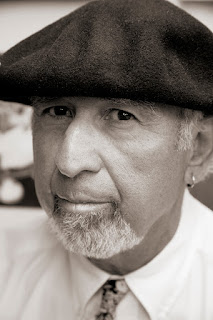
I'm leading with this portrait of the handsome Mark Asmus. Whereas last week's portraits were made with natural light this was a full-on studio shot using a Canon 5D Mark ll with a 24-70mm zoom at 64mm, f8 and 1/180 second. It was lit with two Profoto Acute 2/D4 strobes through 4'x2' Chimera softboxes. 

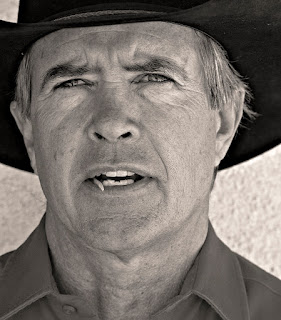
JT was a self-proclaimed former street tough from Chicago. He was shot with single 42" beauty dish by a Canon 1Ds with a 24-70 zoom at 70mm, f9 and 1/125 second.

This is the photographer and writer Daryl Black with studio lighting. Canon  5D ll  with 70-200 zoom at 72mm, f3.5 at 1/125 second through two Profoto Acute 2/D4 strobes through 4'x2' Chimera softboxes. 

Gentleman Don who has since departed this earth was known as Joe McNally's favorite model and was so well regarded and loved that he was the subject of two books, one of them, Sketching the Light by McNally. is available on Amazon. Don is on the cover. He was photographed with a Canon 1Ds, a 24-70mm zoom at 59mm, f9 and 1/8 second. I used a single Profoto strobe through a 2'x4' softbox.

Sadly, the struggle to launch the mentorship program in Antonito has ended with losers all around. After some tense moments, one of which ended with Aaron Abeyta pulling the plug on the program.  He thought that the frustration I felt for “our failures, real or perceived” were not “a good foot to start the journey on.” That was followed by last minute reprieve. Then it all came to naught when I insisted that there be adult supervision, a chaperone, when I would otherwise be alone with the girls. I had tried to make that clear from the outset and I believed that Aaron understood and agreed. Instead he told me that the school didn't have enough staff to provide that precaution.

It’s no one’s fault but I feel guilty as hell. There’s no doubt I let them down. I’ll always wonder of if I should have taken my chances. On the other hand, I was advised in no uncertain terms to never be alone with teenage girls. I was warned to never put myself in an ‘I said she said’ situation. So, I made the prudent decision but one that leaves me empty. My last email said:

Aaron,

It’s a real disappointment. My heart aches for Sam and Angie, not an overstatement, but it’s a risk I can’t afford to take.

Steve 

This was to be a post about using supplemental light in portraiture and was written primarily for Angie and Sam in Antonito. They will not see it, as I’m sure they didn’t see last week’s natural light post. How would I know? I've never heard.

It’s still for them.

Monday, March 21, 2022

Degree of Difficulty

This was taken with window light in our house in Wellesley, MA in 1973. I used a Kodak 2D 8"x10" camera built in Rochester, NY in 1941, the year of my birth. It's of my sister in law Kim whom we raised as our daughter. She was 12. I had just received the Schneider-Kreuznach 185mm Symar f5.6 lens for my birthday.

As I prepare for my mentorship with Angelina and Samantha in Antonito, I’m being pulled in a half dozen directions. What can I impart in a measly week? Generally, when I think of teaching, I lean toward the general first then the specifics. The principle being that when you understand the concepts the details will make more sense. Not to mention that in week of, say four or five sessions, how many how-to-dos can a couple of novices absorb?

I photographed Alain Comeau on Mount Cranmore in North Conway, NH shortly after I bought my Canon 1Ds DSLR in 2002. I used a Canon 28-135 mm zoom at f5.6 at 1/250 of  second. The cloudy sky served as a huge softbox, something Edward Weston favored in 1920s Mexico. I was about a foot from Alain's face. It's a style of close-up that I still favor.

Using only window light I photographed the late barber and unofficial mayor of Taos Juma Archuleta in his shop just before opening. He opened at 7am. It, too, was shot with the 1Ds and 28-135mm zoom at 125mm, f5.6 and 1/10th of a second. I was rock steady in those days.


Shot under the portal which provided diffuse light Lindsey Enderby was photographed in front of his since shuttered western memorabilia emporium, Horse Feathers, This was with my Canon 1Ds and Canon 28-135mm zoomed to 135mm at f7.1 and 1/50 second.

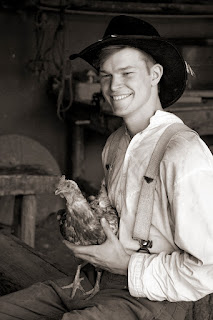
And finally because I love the shot here's a reenactor at the Philmont Scout Ranch holding his pet chicken. It was shot in a barn with soft light from the open door. Shot with Canon 5D Mark lll, the Canon 28-135mm zoomed to 90mm, f5.6 and 1/640 sec due to the high ISO of 1600.
 

Yet they both have expressed interest in portraits and portrait lighting as I noted last time. To that end, over the last week I have posted portraits to Instagram that I’ve taken through the years. Along with the photographs I’ve described the who, where, when and the lighting used to make the shot. I sought to show that a variety of lighting techniques can be used to make a memorable portrait. You’ll note that I used “make” not “take” to describe the process. Make is more constructive than take which seems to suggest that that the photographer is a passive player who simply picks the fruit. And, yes, leading with specifics without explaining the photographic world from ten thousand feet was putting the horse before the horse.

Today jewels were all shot with natural light both outdoors and in. Next week I’ll show images made with on camera flash and studio strobes with various light shapers.

This post and the one next week are cleverly disguised tutorials for my mentees, Samantha and Angelina. So far, they have been largely unresponsive to five days of portrait examples on Instagram. Which is to say one of them said “Beautiful” and the other hasn’t responded at all. That concerns me enough that I sent them an email a couple of days ago asking that they indicate that they have seen each Instagram image by clicking the Like button or heart symbol. That way I’ll know they have seen them, and we can discuss their comments and questions when we meet on March 31. I’ve heard nada, zip and zilch.

I expressed my concerns to my wife Peggy and three friends over lunch on Friday. When I said I’d heard nothing Peggy cautioned me that there could be a host of reasons they haven’t been responsive. They don’t have email. They are afraid of social media. And they are timid. I granted that based on what I'd been told both of them have tough back stories and modest means. They have been described as shy even withdrawn. Two friends who are educators told me of students in their spheres who had come from limited means and who had difficult family lives. They described the difficulties these students had to surmount and the secrets they carried about their circumstances. Another, a retired social worker, coached me to a better level of understanding and patience. Thanks to you all for your wise counsel. This mentorship is after all, about Angie and Sam and not about me. If I can give them a glimpse of the wide world beyond Antonito and inspire them with the endless possibilities in front of them my efforts will have been worthwhile. If they enjoy photography for the next 75 years it will be a gift to Angie and Sam and to me.

Still, I’m mystified when efforts are not acknowledged, questions are not answered, and requests are not honored. It's as though I'm talking to myself and that's not a recipe for success.

Throw me a bone here, girls. Learning is a two way street.

Sunday, March 13, 2022

End Game

Victor 'Cuba' Hernandez with his Mauser EspaƱa on the Taos Plateau in January 2015.


Victor at San Antonio Mountain in 2016.
   
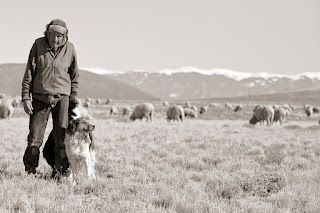
Victor ‘Cuba” Hernandez had his second heart attack and his second triple bypass last month in Pueblo. The doctors discovered a staph infection so he was on intravenous antibiotics for two weeks before the surgery could be performed. Reputedly he is fine now and living on a ranch eight miles east of Antonito, Colorado. For the first time in more than forty years he doesn’t live with the Abeytas in Mogote and will play out his days on another ranch. Victor Hernandez had herded the Abeytas sheep for more than four decades and became The Last Shepherd in my photo essay of the same name. He will be missed.

I hadn’t been in contact with the Abeytas since the lambing in March 2018. So, when Aaron Abeyta, one of the four Abeyta siblings, called to ask if I would mentor two of his students I was intrigued about a new adventure and delighted to back in the loop. Once we’d discussed the students and the prospects for a meaningful program about photography I asked about Victor and the sheep. That’s when Aaron told me about Victor’s heart attacks, surgeries, and his estrangement from the Abeytas.

Andrew Abeyta and Victor in happier days.


Three years ago, in April of 2019, Andrew Abeyta, the jefe of the Abeyta sheep operation, was delivering groceries to Victor at his camp at San Antonio Mountain. The first thing he noticed was that Victor didn’t come out of his trailer to greet him. When he didn’t see Victor, he was on high alert. Victor always walks toward you talking a mile a minute. Andrew knocked repeatedly on the trailer’s aluminum door and heard nothing. The door was locked from the inside, so he got his tool kit and removed the lock. He found Victor unresponsive on his cot.

He was able to get EMTs from La Jara to transport Victor to the small town’s hospital where he was diagnosed as having had a heart attack. Then he was medivacked to Pueblo for his first triple bypass and the beginning of the end of his life as the Abeyta’s hired hand.

I asked how Victor was after the first heart attack.

Aaron told me “He was fine. He was following his goats around. But he couldn’t herd the sheep anymore. And we couldn’t afford to provide hay for his goats, so Andrew told him he had to sell them.”

Victor refused and there were angry words between the men. The fireworks between Victor and Andrew led the old herder to leave the Abeyta Ranch. Whether he was evicted or left on his own I don’t know. I do know that Aaron and Andrew’s grandfather’s dying wish was that Victor would be “taken care of” when he could no longer herd.

Yet just a month ago when Victor had his second heart and was hospitalized, he listed Andrew Abeyta as is next of kin. And it was Andrew Abeyta got him the care he needed

At the hospital in Pueblo, they discovered that Victor had a staph infection, and he was given inter venous antibiotics for two weeks before the triple bypass could be performed. It was successful and Victor is back in the San Luis Valley but not at the Abeyta Ranch.

As we talked about Victor and his amazing life Aaron confirmed that Victor was among the thousands of criminals and mentally ill that Castro released in 1980. Victor was, in fact, one the Mariel boatpeople who landed on our shores that year. 125,000 Cubans arrived in Florida in one day.

Victor had told me that he picked fruit in Florida and California before arriving in southern Colorado. Aaron told me that Victor and Juan, his fellow prisoner and companion, applied to work at the Abeyta Ranch. Aaron said he was about 8 at the time. That makes it 42 years ago or 1980. I have heard of earlier dates but 1980 tracks with Victor’s story of escaping Cuba during the Mariel Boatlift. The timing does not account for the years Cuba says he spent picking fruit in California and California before arriving in Colorado.

Aaron told me,  “First we hired Juan not Victor. Later Victor came to work for us. Juan was a real criminal. In fact, he’s in prison Santa Fe right now. It was drug related I think.”

Victor told Andrew that when he was eight, he was caught stealing bananas because he was starving. He tried to run but when they caught him, they broke both of his ankles and sent him to prison where he stayed until he was released along with 20,000 other criminals by Castro. 32 years in a Cuban hell hole from the age of 8 is hard to process at best.

Aaron prefaced that harrowing story with the disclaimer that Victor is given to hyperbole and the broad application of the facts. “He might have been 15. You never know with Victor.”

“Is he mentally competent? We know he can’t read or count.” I asked.

“Yes, he’s plenty smart. He has a fantastic memory though I know memory and intelligence aren’t the same thing,” Andrew answered.

And the smiling, simple Victor Hernandez may not be the docile creature he appears to be.

Aaron says that Victor sold him a pistol when he was about 12. The next day while they were loading bales of hay, Victor demanded it back. Aaron told him  “No. I’m keeping it. You sold it to me yesterday.” With that Victor began beating him with a 2x 4 from the bed of the truck. Aaron recalls that he was able to disarm Victor and beat him into submission. He kept the pistol.

Where reality and fiction diverge in Victor’s biography we’ll never know for sure. We do know that his life story comports with facts that we can verify. Fact or fiction his life is the stuff of high literature with dystopian sweep and wrenching tragedy. That Victor spent 40 years as the Abeyta’s man on the prairie alone with the sheep is enough of a story to fill a book.

My first encounter with Victor on the Taos Plateau in January 2011.

Since I first met them in 2011 the Abeytas have worried that Victor ‘Cuba’ Hernandez would literally be their last shepherd. It seemed that every year would be his last if for no other reason than age. He'd be 82 now according to my calculations. When he could no longer herd the sheep there would be no one in the valley willing to live in the rough for seven months with 400 bleating charges. At best they’d have import a herder from South America.

When Aaron told me that Victor had to stop herding the sheep three years ago after his first heart attack, my first question was did they find another herder.? Aaron told me that they had. I asked how they found a willing candidate and where he came from.

“We asked around and all the calls led to the same man,” Aaron told me. “He’s from Chihuahua.”

Never count the Abeytas out when it comes to tenacity and resourcefulness. When one door closes for the family another will open. It always has and always will. But it won’t be the same without Victor. His and their story has meant a lot to me. It may be the most important one that I’ve tried to tell. To know that the story will continue is a gift.


Sunday, March 06, 2022

The Rancher, the Poet and the Students

 “Hi Steve. This is Aaron Abeyta. I only call when I need a favor.”

Brothers Aaron and Andrew Abeyta manning the chute during shearing.
.
Patriarch Alfonzo Abeyta

True enough. The last time he needed a favor it was photographs to complement an article he was writing for High Country News. It was the gripping true tale of 12-year-old Alfonzo Abeyta’s survival while tending the sheep with his father in a September blizzard on Brazos Cliffs. Alfonzo, now 84, is Aaron’s father and the granite figure in Los Abeyta’s ranching history in the San Luis Valley of southern Colorado. Aaron’s story about his father and his grandfather in the 1940s epitomizes the grit and tenacity of a life from the land. That my images complemented his epic story was a pleasure and an honor. 

A man of many hats, Aaron Abeyta is the Director of Poetry Concentration at Western State University in Gunnison, CO, was a long-time professor at Adams State University in Alamosa and is the mayor of Antonito, his family home. More recently he and his wife founded a school in Alamosa.

Last week he asked if I would mentor two seniors who will graduate in May. He explained that Angelina and Samantha are interested in careers in photography and that he thought might mentor them. 
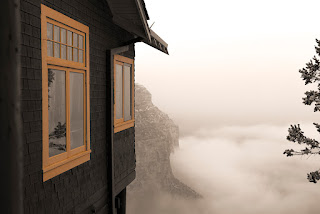
I am excited and a bit nervous about guiding Angie and Sam through the sea of photographic pursuits and studies. I worry that Aaron may think I'm more accomplished and knowledgeable than I am. Yet, after some sixty years of photographing with artistic intent you’d hope I’d have something to share.

So, on Thursday, March 31 I’ll start mentoring Angelina and Samantha in the bold and fast-moving world of photography.

I’m giving a lot of thought to the kind of direction that would help Angie and Sam. According to Aaron, they both have interest in portraiture. And they have asked specifically about lighting and posing. You don’t see a lot of it from me, but portraits are my guilty pleasure and it’s what I’d do if I had to make a living at photography. Either that or photojournalism, architecture, landscapes or still life. Oh, or travel, lifestyle, or sports.

I do have a professional lighting kit in Peggy’s studio. I guess I could re-learn how to use it.

Aaron is a fan of street photography. Me, too. To that end, he has referred my mentees to the street photographer Vivian Maier who worked as a nanny while she photographed anonymously in Chicago, NYC and around the world for four decades. She wasn't discovered till after she died which speaks to the legion of fine photographers who go unnoticed. I have offered Margaret Bourke-White and Dorothea Lange, two towering Depression era photographers as reference points. More recommendations will follow.

Angelina owns a camera. Samantha does not. Both photograph with a smart phone. The smart phone is an extraordinary tool. But I want them to have ‘real’ cameras with manual controls so they can learn the theory and mechanics of photography. With that in mind, I shipped an older Sony mirrorless camera to Connecticut for repairs on Friday. I hope to have it before our sessions begin. 

Otherwise, be very afraid. I'll be at your door begging for a loaner

Sunday, February 27, 2022

Encounters of the First Kind : Gilbert Vigil

Gilbert Vigil in Cundiyo, NM.

When I met Gilbert Vigil while I was photographing the village of Cundiyo, NM. I was walking back to the church from the corner of Main and Main when a Pitbull came slathering at me. I was menaced by the beast and not a little afraid. Thankfully, at that moment a gray pickup coming down the hill stopped beside me and the driver, stout Hispanic gentleman, rolled down his window and greeted me in Spanish.

As described last week we exchanged pleasantries, he gave me a dozen eggs and we threatened to keep in contact.

I have tried to express how soul warming it is to make a friend and to feel that you really know that unique human being who was a stranger five minutes before. I haven’t, so far, found the words to describe that chest filling phenomenon but each time I’ve had the life affirming experience it’s become a blog post. Gilbert is the sixth or seventh. To add dozens more is my mission.

It’s my belief that you can know the arc of a person’s life inside of ten minutes. With Gilbert Vigil that was absolutely the case.

I learned that Gilbert is 75 years old and just got new knees. His discomfort which was evident when he got out of the truck to get the eggs from the back seat. He was visibly hobbled and in pain.

When he got back in the truck, he told me that he used to weigh 230 pounds and was 200 now. He said he wanted to lose another ten and he’d be able to get around better. I did not volunteer that at his height 175 would be a better goal.

“How much to you weigh, 140?” he asked.

I answered, “About 155.”

“You carry it well.”

“How tall are you, 5’10?” he probed

I replied, “5’-91/2” on a good day.”

Gilbert said, “I used to be 5’-10.”

I sympathized, “I was 5’-11” when I joined the Army in 1960.

“I refused to serve. I didn’t want to kill anybody. So, I did a year in a Federal pen and after that I volunteered to fight forest fires.” Gilbert told me.

“You’re lucky you went to a Federal prison, Gilbert. State prisons are hellholes by comparison.” I offered this without first hand knowledge.

“My prison in Safford, AZ. It wasn’t that bad.”

"There are lots of prisons around Safford, State and Federal," I offered.

He said he didn't know that.

“What do you know about Jehovah’s Witnesses?” he asked me.

I told him “Not much but they come to the door from time to time.”

“We don’t do that anymore because of Covid. But Jehovah’s Witnesses are good people. We live by the teachings of the Bible. It’s very strict. Do you have a piece of paper?” he asked me.

“I always have paper and a pen” I told him and handed them to him.

On a page he wrote “JW.org”

“Check it out” he suggested.

“I’m not a very good candidate, Gilbert. I’m agnostic at best.”

“Agnostic. Is that somebody who doesn’t believe?” he asked me.

“No. It’s somebody who isn’t sure’ I answered.

“Who is?” he answered with a disarming smile.

He continued that, “I’m a carpenter. In fact, I built the parking garage at the Jehovah’s Witness headquarters in Brooklyn. I was a volunteer.”

“My wife and I didn’t have kids, so we travelled a lot. We both had good jobs so we could do it. We went to Russia and China and all over Europe.” He told me.

“Isn’t foreign travel eye opening?” I marveled to him.

“It’s a miracle”, was he responded.

I told him that “The greatest joy of being somewhere new is meeting people, meeting someone for the first time and knowing their life story. Like today with you.”

I described meeting Luis Ocejo after Sunday services at the little church in Llano San Juan.  While I took his portrait Luis declared. “You don’t want to mess with a Viet Nam vet. We’re tough." His ballcap boasted that he was one.” We spoke for maybe three minutes, and I only needed thirty seconds to know the most important event in his life. Nam.

With Gilbert I'd guess that it was his prison stint during the Viet Nam or his devotion to his Jehovah’s Witness faith. Likely both. You’re allowed more than one life altering experience. You could even say that the more you have the more you’ve lived.

I told Gilbert, “Let’s keep in touch, get a coffee or a beer sometime.”

He replied, “I don’t drink anymore. I stopped four years ago. I got in trouble when a drank.”

“I get it, Gilbert. I drank like a fish till my mid-forties. I’m lucky I’m still here.”

Monday, February 21, 2022

Cundiyo y Mucho MƔs

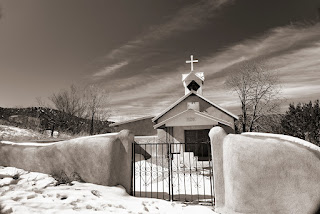
Capilla de Santo Domingo, Cundiyo, NM

I have driven the high road to Taos dozens of times in the past 20 years. Sometimes I make a special trip to photograph the villages along the road. But most often I take that route to break up the monotony of driving through EspaƱola and the dangerous canyon. That’s usually when I am coming back from an appointment in Santa Fe as happened last week when I had a medical appointment and decided to return via the High Road.

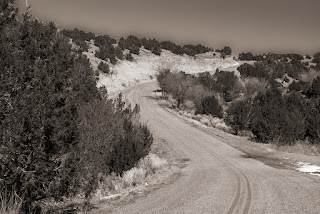
The Road to Cundiyo

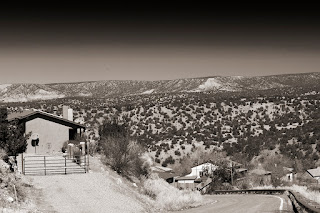
Beautiful Cundiyo

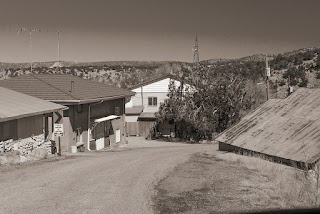
Cundiyo Center

I drove through Pojoaque and turned east through NambĆ© were I planned to turn north to Chimayo where I would continue northeast to Truchas, Las Trampas, PeƱasco and Taos. I photographed two old adobe houses in NambĆ© and continued east. But his time instead of turning left to Chimayo I continued straight ahead where the sign said “Winding Mountain Road....” I decided to see what I would find. After about five miles of twisting road, I turned left down shallow hill into the postcard village of Cundiyo. It was a quintessential Spanish village. At the height of land stood lovely church, La Capilla de Santo Domingo. “How could I have missed thus jewel?” I thought to myself. Cundiyo is the perfect Spanish mountain pueblo, the most idyllic I’ve seen yet.

Santa Domingo in the snow 

Since there was still snow on the ground from the recent snowstorm. I parked across the street so I could photograph the little church from various angles. The capilla was charming and the village was absolutely enchanting.

A week later I got the itch to return so I could complete the task of depicting Cundiyo. As I processed my images Sunday morning, I knew I hadn't done the village justice. 

I did learn that Cundiyo is in Santa Fe County and is exactly 30 miles from the city different. There are 72 hardy residents sharing their private paradise. It might as well be in another country.

As I strolled the village to photograph a gentleman in a pickup truck stopped and spoke to me in Spanish. I feigned understanding and he declared, “You speak Spanish.”

I mumbled something incomprehensible. He smiled and said, “Poquito.“ Very little, indeed.

I boasted, “Probablamente soy un hispanohablante intermedio.” An intermediate Spanish speaker. On my best day, I thought to myself.

Gilbert Vigil from EspaƱola told me there were lots of Vigils in Cundiyo. Then he said, “I think you’re a nice guy.

I told him, “I hope so.”

“Do you want a dozen eggs?” he asked. ”I have chickens.”

I answered. “Sure, but I want to pay for them.”

“I don’t want you to pay for them,” Gilbert insisted.

 “Okay then. I’ll take the eggs. Gracias.”

 "Don’t wash them. If you don’t, they’ll last four months. God put a film on them to protect them. You don’t want to remove it.” He instructed me.
“The eggs are safe. We don’t wash eggs.”

Gilbert gave me his phone number and we agreed we’d get a cup of coffee or a bite to eat sometime soon.

My visits to Cundiyo underscored a couple of things. First, take that fork in the road or, as in this case, the winding mountain road you’ve avoided for 20 years. You need a surprise in your life.

And they reinforced the notion that you can make a warm human connection very quickly and you can get to know a person you’ve just met very well very fast. Just listen.

Gilbert Vigil will be the subject of next week's blog as part of the series Encounters of the First Kind. The last quick study was meeting Amy French at the Grand Canyon last September. 

I’ve got to pick up the pace if I'm going to extrude a book out of first meetings.


Monday, February 14, 2022

Running Old

The legs in 1982. I promise they're the same today.
 
Three times in as many weeks I ‘ve been stopped during my daily run by women who tell me how impressed they are that a man of my age is still ambulatory. Most recently a physical therapist at Holy Cross Hospital was riding her bicycle up Weimer Road as I was starting my run down the shallow hill. She stopped and asked, “How old are you?” She might as well have asked, “Why do you even bother?”

I replied, “80.”

She asked, “80 exactly?” She really meant, “Is that all? You look 97.”

I replied, “Yup.

She said, “Good on you” and rode on.

And earlier in the week I was running down CaƱon Este near the Youth and Family Center and a car did a U-turn, so it faced me as I shuffled along. A young woman got out of her car and waited for me.

“I see you running all the time. You are such an inspiration.” She put her hand over her heart. I asked her name.

She answered, “I’m Rosalina Molina. I live on Monterey in Weimer. Weimer is a tony neighborhood nestled into the foothills of the Sangre de Cristo Mountains that rise above Taos. I told her we had lived in Weimer long ago and, in fact, had almost bought a house on Monterey. I added it was a great place to run and I missed that part of living there. That I was still running in and around Weimer despite living five miles away exemplified exactly that I suppose.

English was Rosalina’s second language I observed. She spoke flawless English but with a lilting Mexican accent.

She gushed with such praise that I was embarrassed. Rosalina told me that she was so impressed that she was going to go home, put on her sneakers, her words, and go for a run.

I wanted to encourage her, so I fell into full coach mode. I told her to try running four times a week for thirty minutes each time. That would produce the greatest cardio-vascular benefit for the least effort. That’s the nugget I employed when I stared running almost 46 years ago. I emphasized that developing a habit was the key to a successful exercise routine. Rosalina promised she’d try that very evening. The conversation was much longer but that was the essence of it.

Rosalina was so effusive that I was touched, embarrassed, and depressed in one messy package; touched because she was so kind, embarrassed by the hero worship, and blue because I knew what compelled her to reach out to me. In her eyes I was manifestly old, and miraculously still putting one foot in front of the other.

The third episode was on Weimer Road where it meets CaƱon East. This time I was running uphill, so I looked like I was running backward. A mature woman driving downhill stopped her car and rolled down her window.

She told me. “I’ve watching you run for years. I am so impressed. It’s incredible that you’re still running at your age.” I didn’t know whether to laugh or cry.

I replied, “Thanks, I guess. I just keep on plugging. If I stop, I’m afraid I won’t be able to start again.”

It reminded me of a nugget by Jeff Jerome, a San Francisco journalist in the 70s. He wrote in The Complete Book of Running that “We exercise to preserve function.” Or, said another way, “Use it or lose it.” It means that if we keep doing that priceless act we’ll be able to continue doing it. Stopping is The End. I’ll stop when my body stops.

I’m being praised because I am demonstrably old. I run like I’m 80 years old. My steps are short. My cadence gives slow a bad name. You have to time me with a calendar. I'm hunched over and my face is a death mask. Only my taut and sinewy legs bely the years. Those babies are unchanged since 1982. See the before picture at the 1982 NYC Marathon above.

For decades I’ve believed that I could I can fool Father Time and that the strictures of aging don’t apply to me. It’s between your ears, viejo. It’s mind over matter. Even now as I churn out 12-minute miles I fantasize that with an attitude adjustment I can still run 10-minute miles and cover six miles instead of four in an hour.

That my New Year’s resolution, to run like I’m 65 all over again. That’s when I last ran a 10K sub 50 minutes, just under 8 minutes a mile. It’s incomprehensible. Back then I could link two or three 7-minute miles. I’m 50% slower than 2007. That decline seems excessive doesn't it?

I’d like to not look like an old man when I'm running. In my perfect world the only way you’d be able to guess my age is to see me without a mask.

I’ll be giddy with six miles an hour. Maybe at that pace women will stop accosting me.

PS. Today I ran my usual route in Weimer. I was so pumped to get faster that I threw in 12-70 to 125 yard pickups or fartleks which means speed play in Finnish. I ran as hard as I could till I was winded, that's called being anaerobic. I jogged till I caught my breath and repeated the process. I ran farther on my the out leg of my out and back route than I have in a year. Jesus, it was hard. 


Sunday, February 06, 2022

Local Knowledge

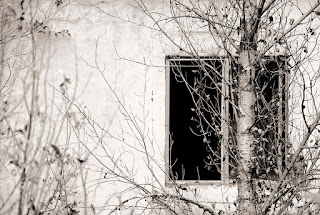
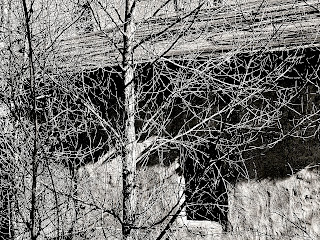
The abandoned adobe next door.

The shambling casa, left to the elements has been sold or so we understand. The house deemed as worthless will be scraped from the grown over half acre and we'll await its fate as a tidy cottage. We hope.

I
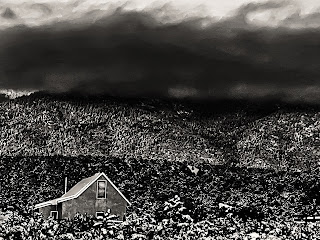
Wednesday we drove north to to Arroyo Hondo in time for the blush of sunset.

I
The Hondo abode as seen in classic black and white

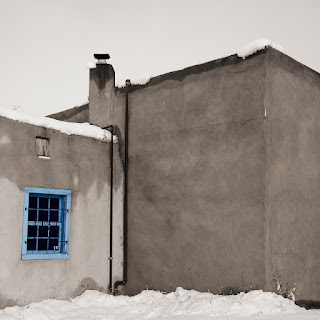
Ventana Azul. The Torreon Hacienda in El Prado, NM.

It’s widely known that I have to leave town to take a photograph. So, when I offer images from within, say, 15 miles, it’s uncommon if not rare. In that spirit these are quite local, from 100 yards to 20 minutes away. It’s been proffered that one can explore his north forty on a daily basis and never run our of inspiration. One will see the tried and true differently each time she or he looks closely at the familiar subject. Teaching yourself to “see” is a big part of the artistic process. It means slowing down just a smidgen. It’s amazing what we absorb when we see a subject again for the first time.

They are linked by absolutely nothing unless it’s texture of which there is a lot. 


Sunday, January 30, 2022

Magic Light at Desert View

Desert View Watchtower at Sundown

Waiting for the sun to fall beneath the western horizon

Reflected Sky

Standing Tall

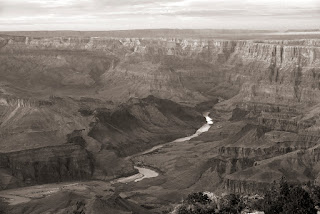
Marble Canyon from Desert View

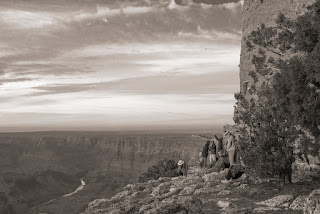
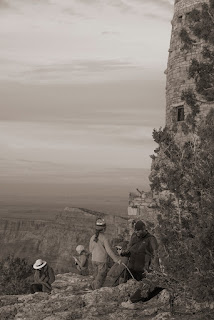
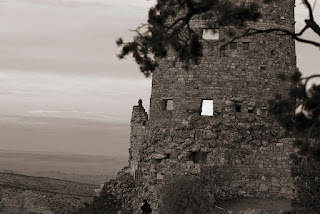
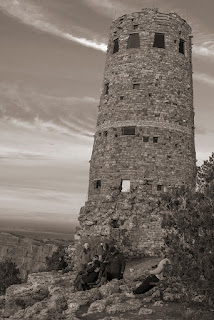
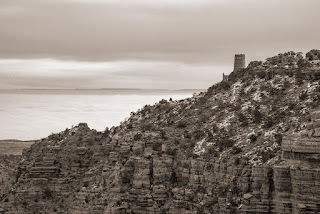
As I noted last time, we entered Grand Canyon National Park at sundown on a Monday in January. We were treated to light show as only the Watchtower at Desert View can provide. It was an inspiring start to our short canyon sojourn. We departed the canyon early Wednesday and I wanted to get a long shot of the tower in order complete my series on Mary Colter’s magnificent creation. So, we spent half an hour at Navajo Point, the point just west of Desert View, where we had an unobstructed view of the tower. Just as we hoped the cylindrical atalaya probed the sky at the highest point of the South Rim. It's small from that distance but you can grasp the epic scale of the canyon and how perfectly the tower is sited.
Desert View Watchtower from Navajo Point

The watchtower is a magnet for visitors craving a quintessential sunset view of the canyon. And since it’s 23 miles east of Grand Canyon Village it isn’t overrun. Cozied into the depression made by the 70 foot tower and its 30 foot boulder base a dozen hardy souls in down parkas watched the sun fall behind Hermit’s Rest and basked in the golden light.


Sunday, January 23, 2022

Cloud Cover

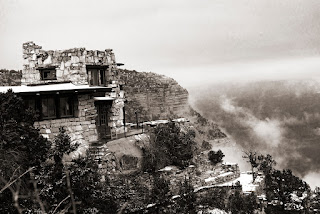
The view from the Kolb Studio

The Kolb Studio

I’ve visited the Grand Canyon on two occasions this year. And I’ve driven US 160 through the Navajo Nation thrice. When Peggy needed to pick up several paintings from the Celebration of Art exhibition the Grand Canyon’s Kolb Studio, she invited to join her for a quick out and back, in on Monday evening and out early Wednesday morning.

Mary Colter's Lookout Studio

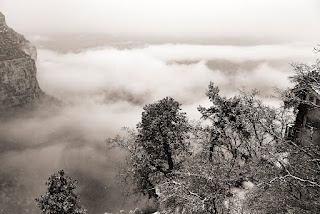
The socked in Canyon from the Kolb Studio

As seen from Bright Angel Lodge

There were some notable holes in my compilation of photographs of Mary Colter’s extraordinary buildings and I reckoned I could complete the package and we’d enjoy a short vacation at the same time.

We entered the park through the east entrance just before sundown. And, as in 2017 when I visited the park at the golden hour with our son Garrett, we were treated to light show at Mary Colter’s Desert View Watchtower. That good fortune, I must admit, can be attributed to bad navigation on my part. I thought we’d be entering from the south. Mistake or not, a win is a win.

We checked in with just enough time to unload our gear and make it to the El Tovar for our 7:45 dinner reservation. Our expectations were modest to tell the truth, but the meal and service were north of adequate. The menu may have been from the early 1980s, but the salmon was properly broiled, and the company was aces.

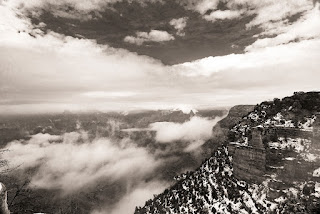
The fun really started when we woke up Tuesday to gently falling snow. We were giddy at the prospect of photographing the gaping maw in a snowstorm. So, after picking up Peggy’s paintings we photographed the abyss from the Kolb Studio to Colter’s Lookout Studio and then the Bright Angel Lodge. Then, finding that the gate to the west rim was open and unmanned we stopped at Hopi Point and Pima Point before our terminus at Colter’s Hermit’s Rest and rich hot chocolate and cookies.

The snow was magical and let us appreciate the South Rim in the wintery silence. Low clouds cloaked the canyon and puffs reached deep into the canyon.

These images barely scrape the surface of January’s wonder. Brace yourself for more next week.

Monday, January 17, 2022

Tidbits

Casa Immel on New Years morning

Chamita Homestead

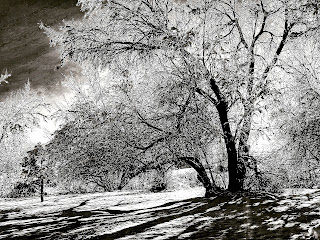
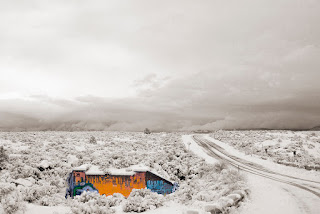
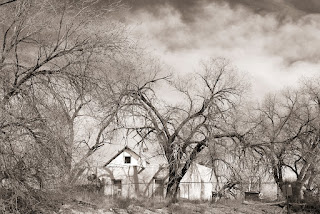
No stories to tell, really. This is a hodgepodge of images made since the first of the year. Number one of our back forty after a snowy night is all about shadows and textures. It’s busy sucker. Another in the same vein is from Hernandez, NM just past the junction of US 285 and NM 74 in the village of Chamita. Chamita was the home of Los Abeytas before they migrated to Colorado’s San Luis Valley after the Treaty of Guadalupe. The sheep ranching family was the subject of my five-year immersion in the rural Hispano culture of family, faith, and the land. Do not ask about the book should have come out of that enriching experience.

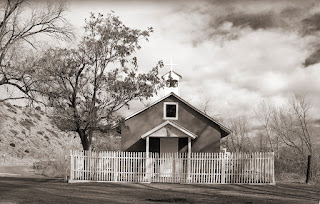
La capilla, El Guiche


And speaking of faith, the tiny chapel or capilla in this grouping seemed like a private family church in a tidy compound astride county road 582 in El Guiche, NM.

Remote tagging

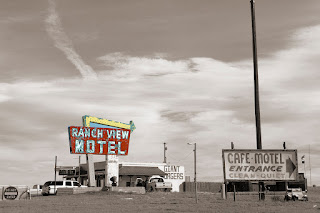
Ranch View Motel with Giant Burgers

And I wind up with a couple of spot color numbers, one from the snowy llano south of Taos and the other from plains of central New Mexico.

Trees and sky. What more could a I guy ask for?

Monday, January 10, 2022

Welcome Snow

Taos Plaza in falling snow

Entering a glowing Ledoux Street

The Inger Jirby Gallery with shards of snow

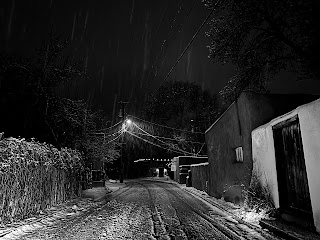
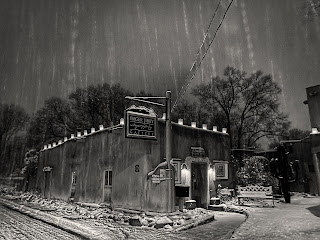
New Years Eve we were blessed with six inches of glorious snow. At midnight the town was still and bright. As we drove through Downtown Taos and our historic plaza the snow darted down and the lights beamed in the dark night. The lights on Ledoux Street leant a caressing glow to the New Year. It was a magical welcome to 2022.


Leaving Casa Immel on New Years morning

Approaching the Rio Pueblo Gorge

The west rim of of the Rio Pueblo Gorge

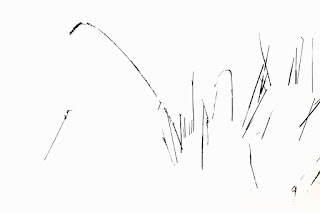
Brush Strokes, La Morada de Nuestra SeƱora de Guadalupe, December 11, 2007

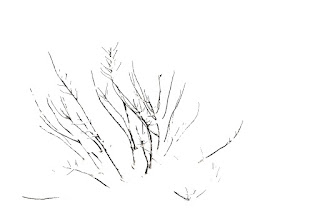
Brush Strokes Redux, January 1, 2022

The next morning, we left the Immel rancho for a photo jaunt to the junction of the Rio Grande and the Rio Pueblo. At the top of the Slide Trail that dips into a narrow canyon carrying the Rio Pueblo to the Big River I turned walked along the rim to get a grab bag of shots. One of them took me back fourteen years to the image that launched my Sketches of Winter series. It’s called Brush Strokes because, well, it looks like a drawing.  Another shows the west rim of the Rio Pueblo gorge with the epic sky we’ve come to expect in the Rio Grande Recreation Area ten miles southwest of Taos. The swath of high desert scrub is riddled with hiking and mountain biking trails. It’s become a favorite place for a hike though a leisurely stroll through the juniper and sage is a more apt description. Taxing it isn’t. Scenic it is.